
There’s More Science To Dog Bite Cases Than You Might Think
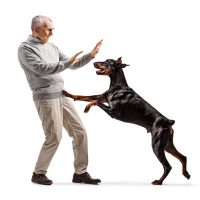
When we think of dog bites and dog bite injury cases, we don’t turn our minds to science. Dog bite cases don’t seem to be the most scientifically involved cases that would require any type of specialized knowledge to prove. And while that may be true in some dog bite (and dog injury) cases, that isn’t as true as you’d think–there actually is a lot of science in dog bite cases.
Why We Need the Science
Dog bite cases can be difficult to prove, because there often are no video cameras. People may be bitten on public streets, and while there may be some camera affixed to a nearby building, that isn’t always the case.
That means recreating how the accident happened. The first step is to determine how the victim is injured. In many cases, victims say they were bitten because they believe that’s what happened, but they were actually scratched. Other times, someone may say they were bitten and the dog owner contends that it wasn’t his or her dog at all.
The position of the victim at the time of the bite matters as well, because provocation of a dog is a defense. In some cases, a victim’s physical positioning can help determine whether the victim did or did not provoke the dog, or do something careless to cause the dog to bite.
What Experts Might Look For
To figure these things out, experts will look to bite (or scratch) patterns on the victim, and compare them to the teeth or nails of the dog whose owner is being sued. These patterns can also tell what angle the victim approached the dog at, whether the dog jumped when scratching or biting, and other information about the positioning of the dog and the person.
As an example, if a dog bites, you might expect there to be two “marks” or physical injuries on the victim, one representing the dog’s upper and lower jaw or mouth. That would tell you that the injury is from a bite not a scratch. But there are times when a bite may only yield one marking, such as when the dog’s bite only makes a glancing blow, or where the part of the body the dog bit is uneven and only registered one bite mark.
What is Provocation?
And because provocation is an issue and a defense in dog bite cases, it raises the question of what exactly is provoking a dog? While none of us can fully communicate with dogs, there are dog behavioral experts who can testify as to how dogs may perceive even innocent human behaviors, and how that behavior can cause a dog to bite, jump, or scratch even playfully.
The dog’s background needs to be accounted for as well; some actions may provoke one dog but not bother another one in the least.
Contact our Rhode Island personal injury lawyers at Robert E. Craven & Associates at 401-453-2700 for help if you were injured in any way by a dog.
